Villa Spina
Palermo
Villa Spina: Un Patrimonio di Storia e Bellezza a Palermo
History
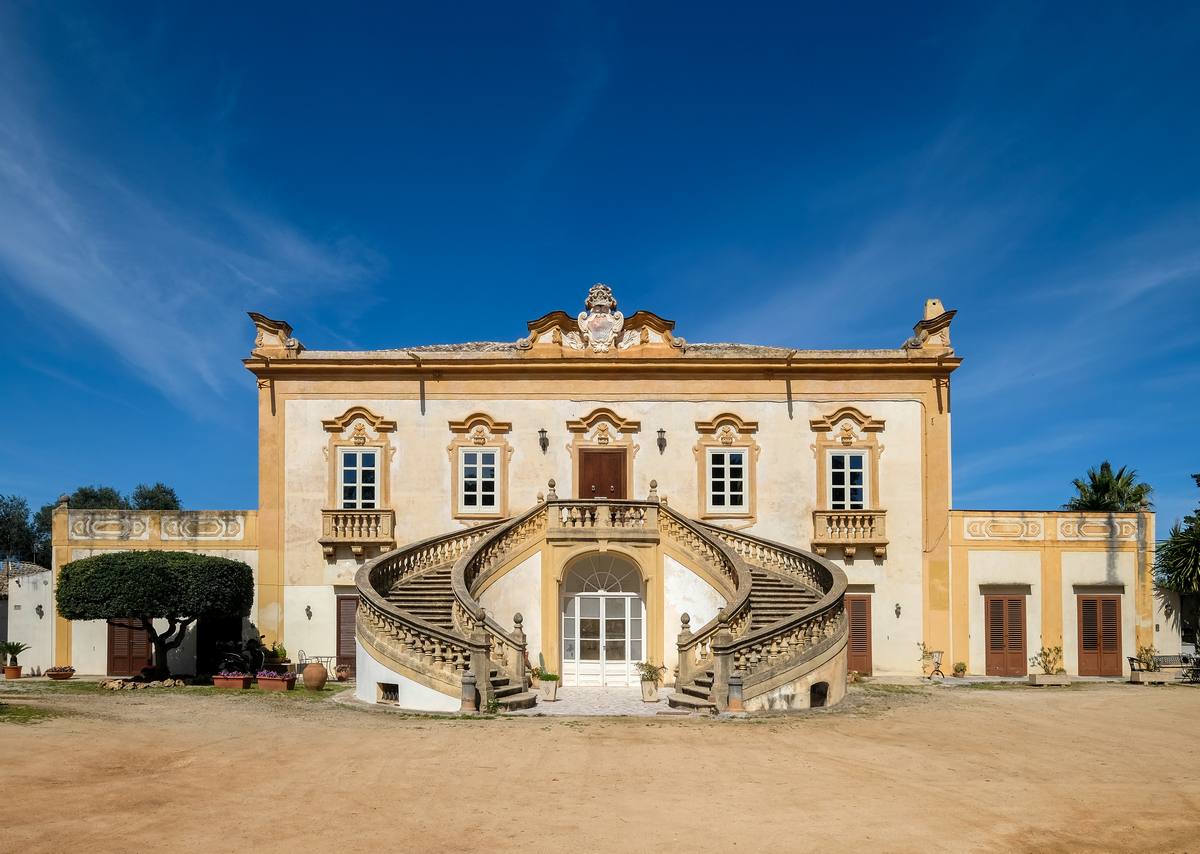
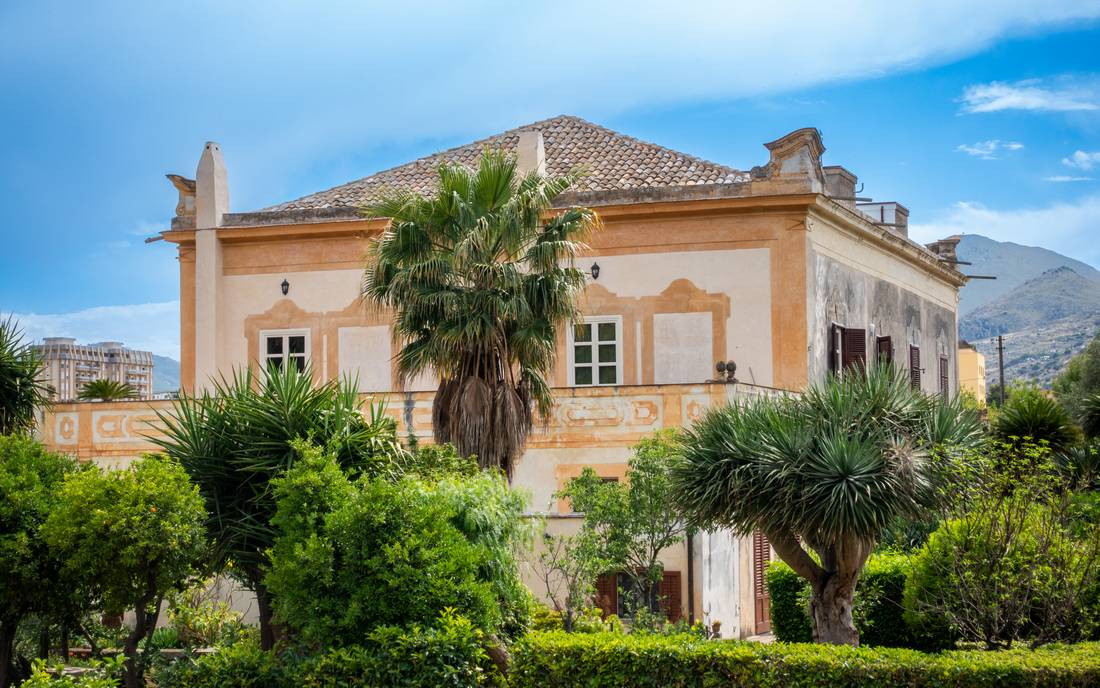
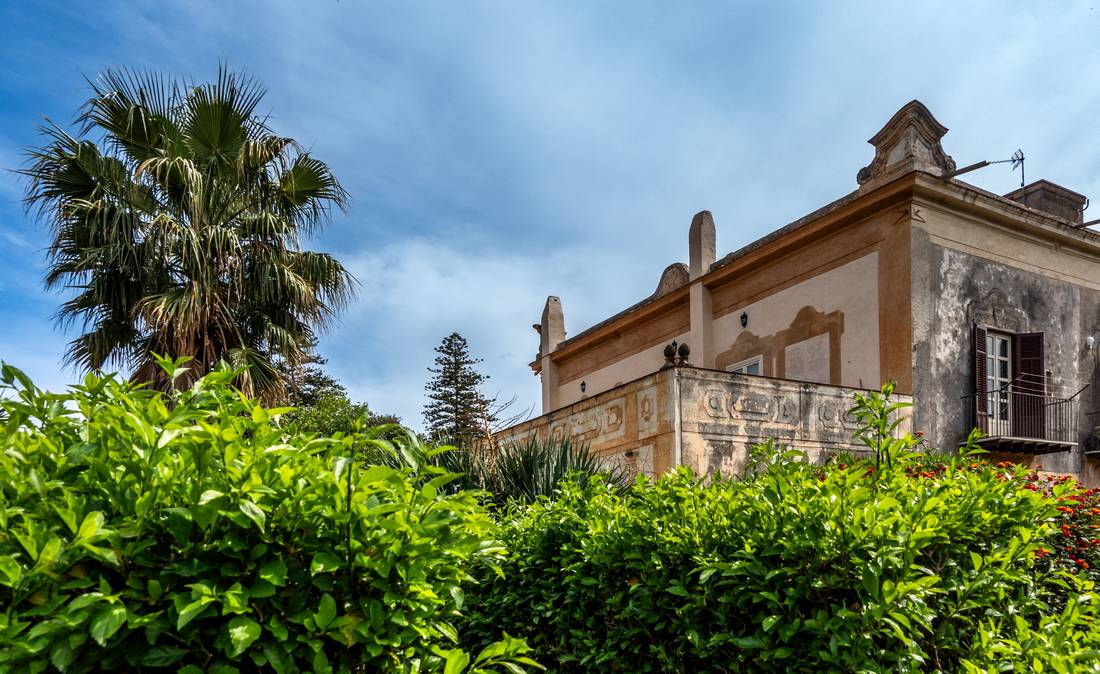
Villa Spina, originally called Villa San Vincenzo, was built in 1676 by the Vanni La Torre di San Vincenzo family. The villa, located in the Piana dei Colli area of Palermo, was intended as a summer residence. Vincenzo Vanni, Maestro Razionale of the kingdom, founded the villa. At the end of the 18th century, the villa was owned by his son Alessandro Vanni e La Torre, Prince of San Vincenzo. In the 19th century, it belonged to the notary Vella. In the last century, Vella sold it to the Isgrò family, who later transferred it to the Spina family. Today, the piano nobile of the villa is owned by the Palminteri and Montalbano families. In 1977, these families oversaw the restoration of some rooms to their original design, and in 1984 they repainted the main façade.
The Coat of Arms of Alessandro Vanni La Torre
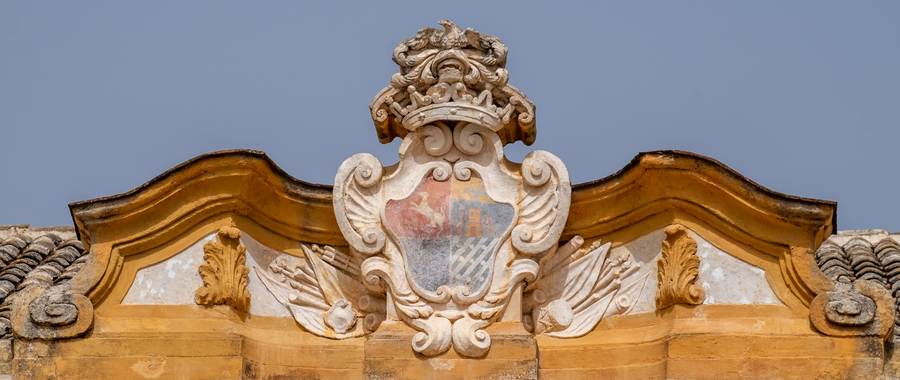
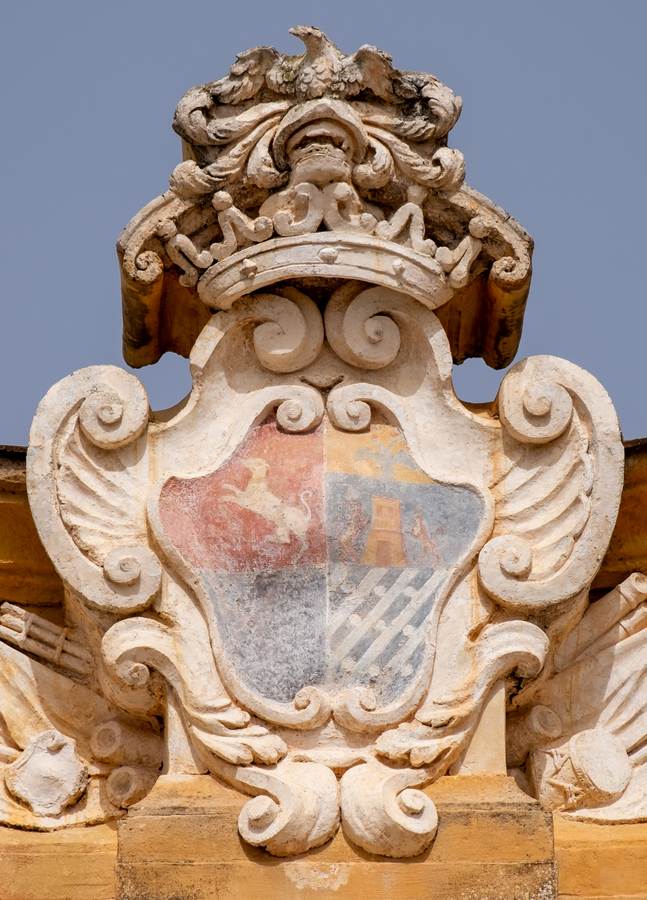
Alessandro Vanni La Torre, first Prince of San Vincenzo, possessed a noble coat of arms divided into quarters, each representing a different family. The coat of arms is located above the cornice of the frontispiece of Villa Spina, formerly called “Villa San Vincenzo,” a summer residence commissioned by the same prince in 1676.
Here is a description of the quarters of the coat of arms:
First Quarter (upper left): Represents the coat of arms of the Vanni family, inherited from Alessandro’s paternal grandfather, Francesco Vanni, senator of Palermo in 1678 and 1690. The coat of arms is described as “Arms of red, with a silver greyhound standing collared in gold.”
Second Quarter (upper right): Represents the coat of arms of the La Torre family, from Alessandro’s mother, Eleonora La Torre Montaperto. The coat of arms is described as “Arms of azure, with a silver tower flanked by two lions facing each other and counter-rampant in gold, surmounted by 3 lilies of the same (by concession of Philip King of France to Napoleon della Torre Prince of Milan) with a chief of gold charged with a two-headed eagle displayed in black crowned on both heads with a Prince’s Crown.”
Third Quarter (lower right): Represents the coat of arms of the Montaperto family, from Alessandro’s maternal grandmother, Melchiorra Montaperto, of the princes of Raffadali. The coat of arms is described as “Arms of azure with 4 bars alternating with nine roses, arranged 1.2.3.2.1; all in silver.”
Fourth Quarter (lower left): This quarter has now faded with time and is no longer visible. It should represent the coat of arms of the Marino family, from Alessandro’s paternal grandmother, Lucia Marino. According to the historian and genealogist Filadelfo Mugnos, the coat of arms of the Marino family is “azure, with 3 wavy bars of silver, and a golden lion rampant surmounting the whole.”
Currently, the fourth quarter of the coat of arms shows a continuous azure color, with no trace of the silver wavy bars and only a portion of gray mortar that may have covered the image of the rampant lion. It is presumed that deterioration due to time led to the disappearance of the bars and that subsequently, perhaps under a new owner, the image of the lion was covered.
Characteristics of the Villa
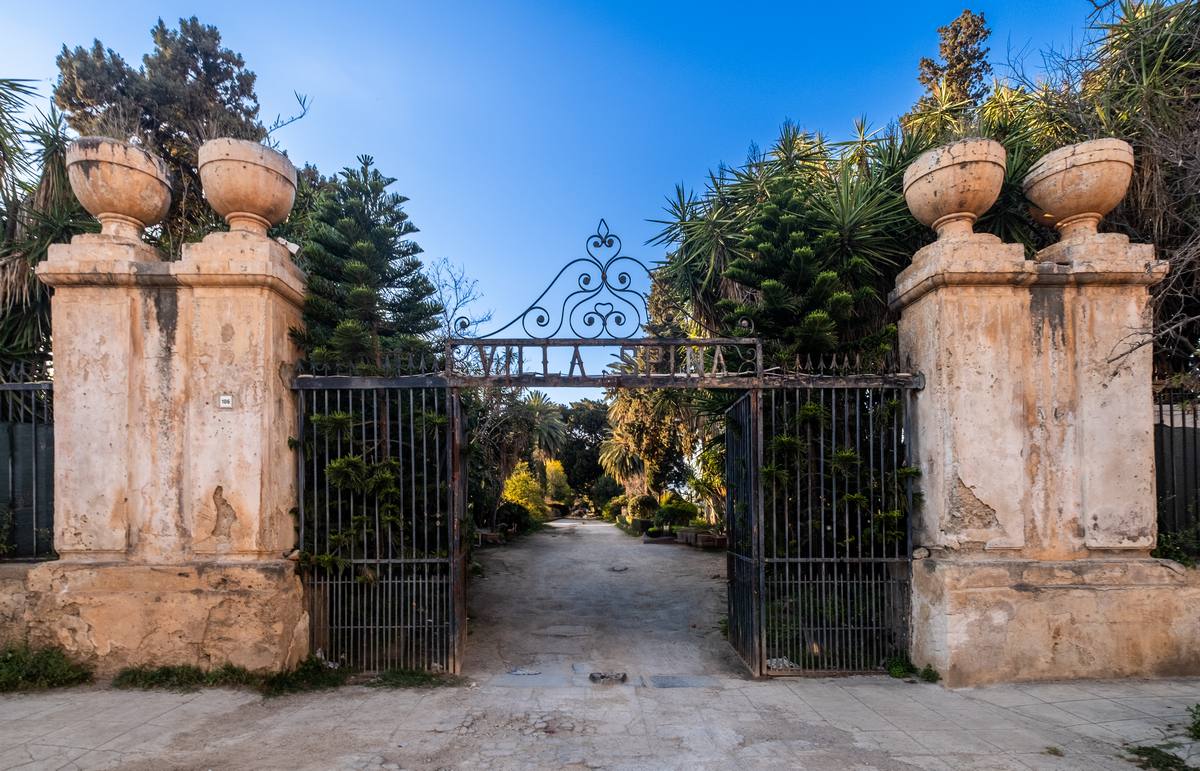
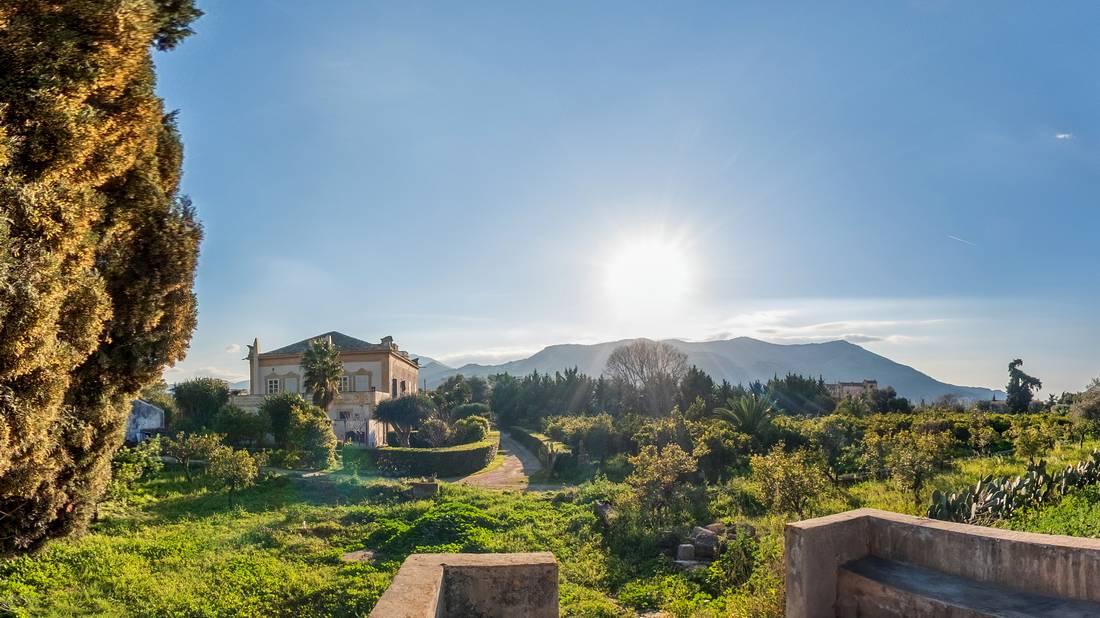
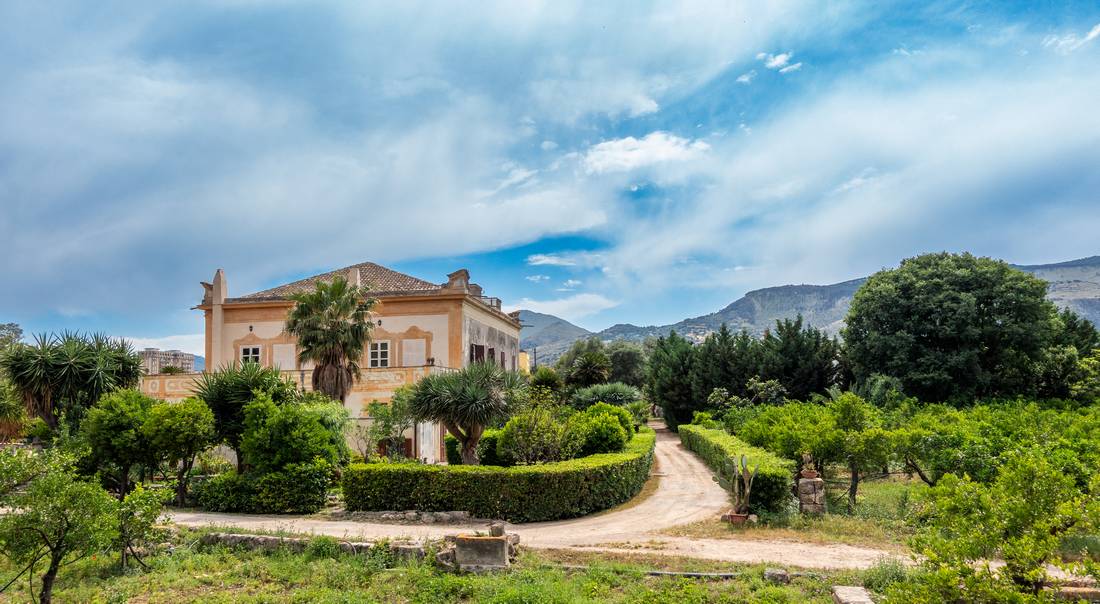
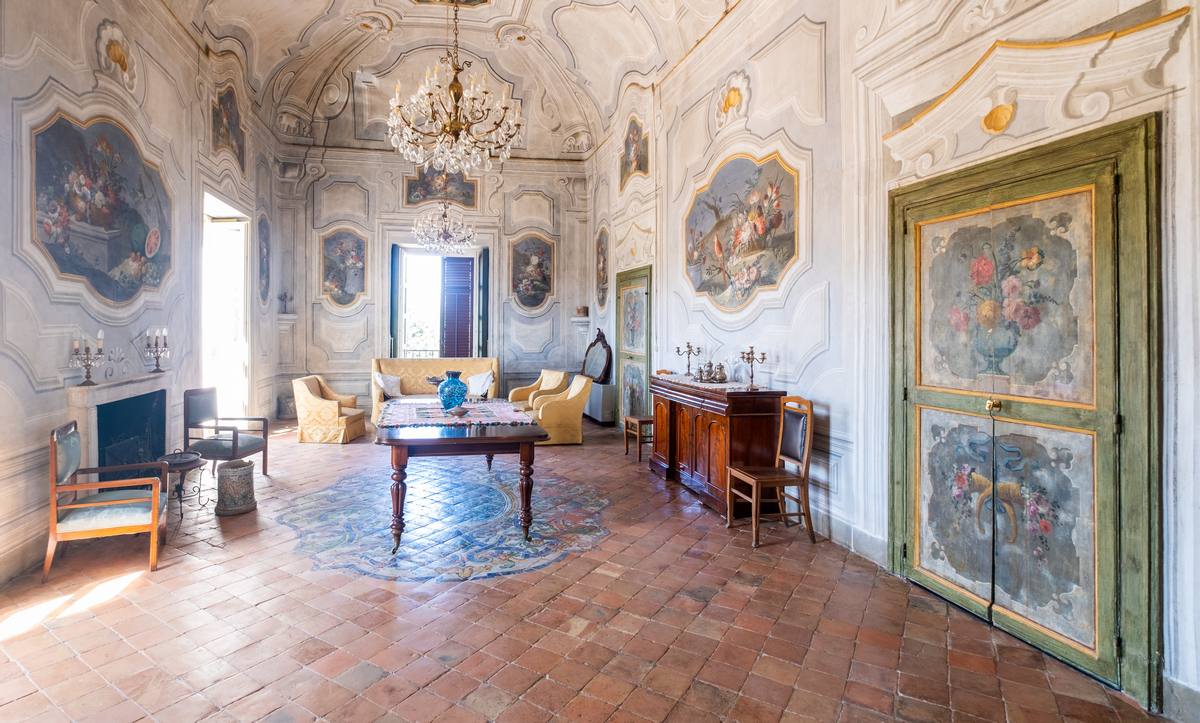
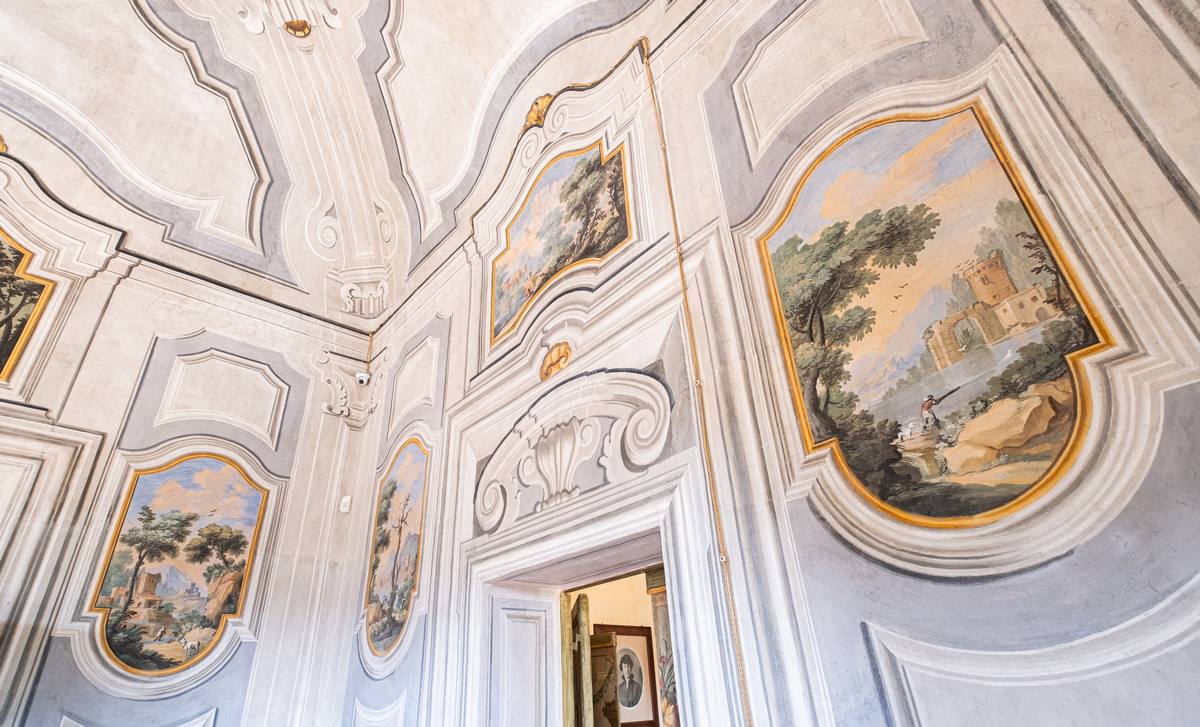
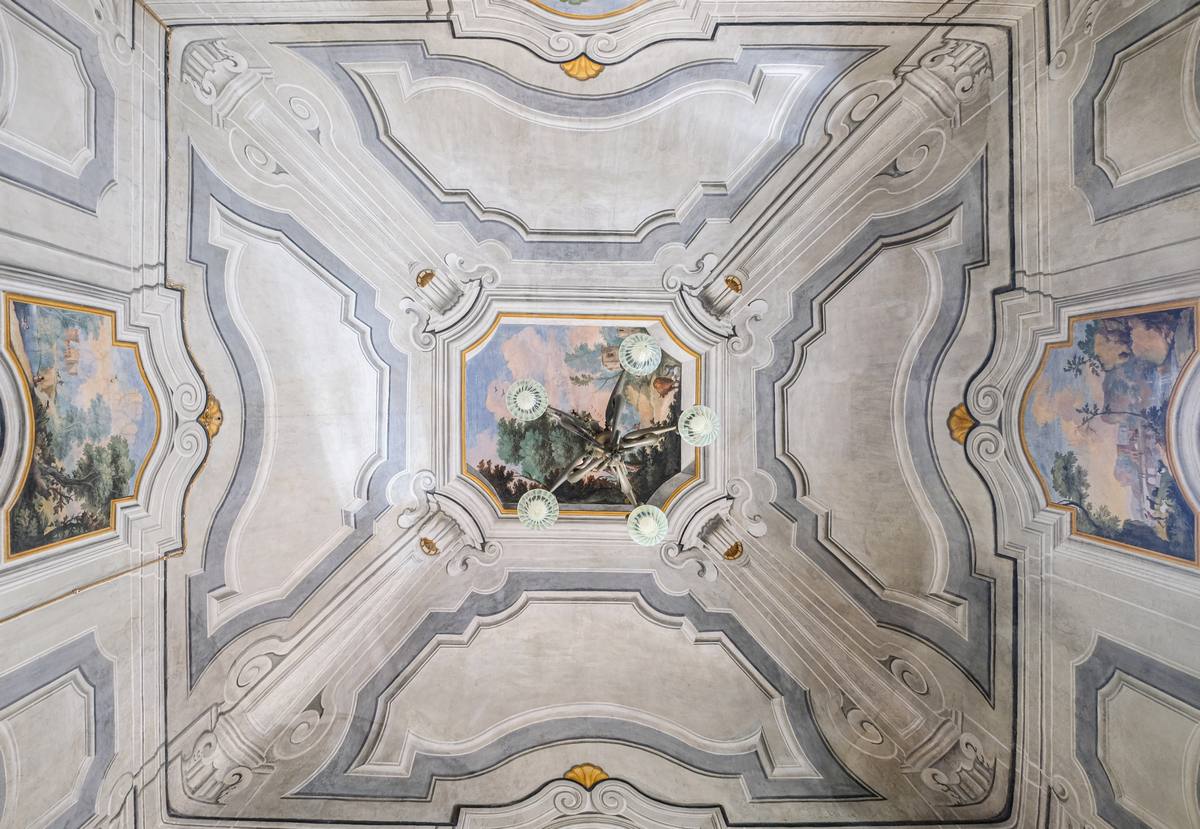
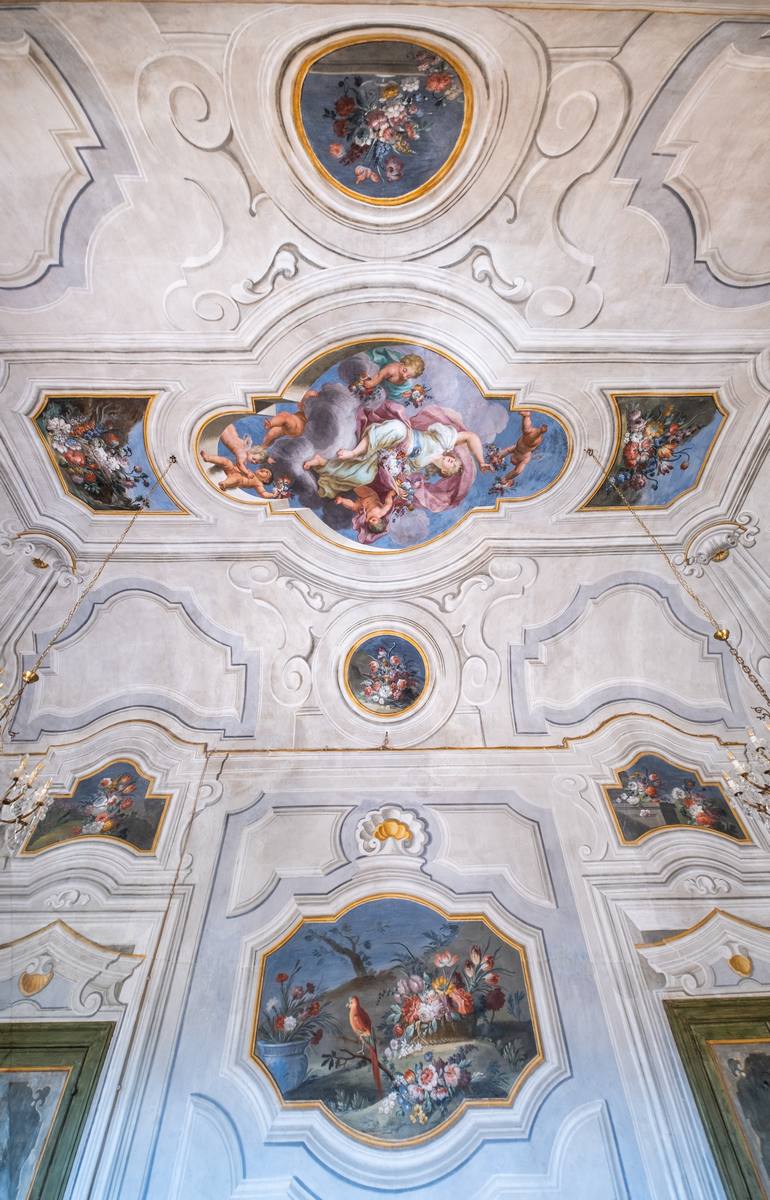
Villa Spina has a large 19th-century entrance on Via dei Quartieri and is characterized by orthogonal pathways, fountains, and a scirocco chamber. On the east side of the villa are the remains of the foundations of the former stables. Marble decorations, benches, and fountains remain in the park. Inside the villa, the piano nobile features 18th-century frescoes, while the ground floor is decorated with tempera paintings executed in classical style.
Changes Over Time
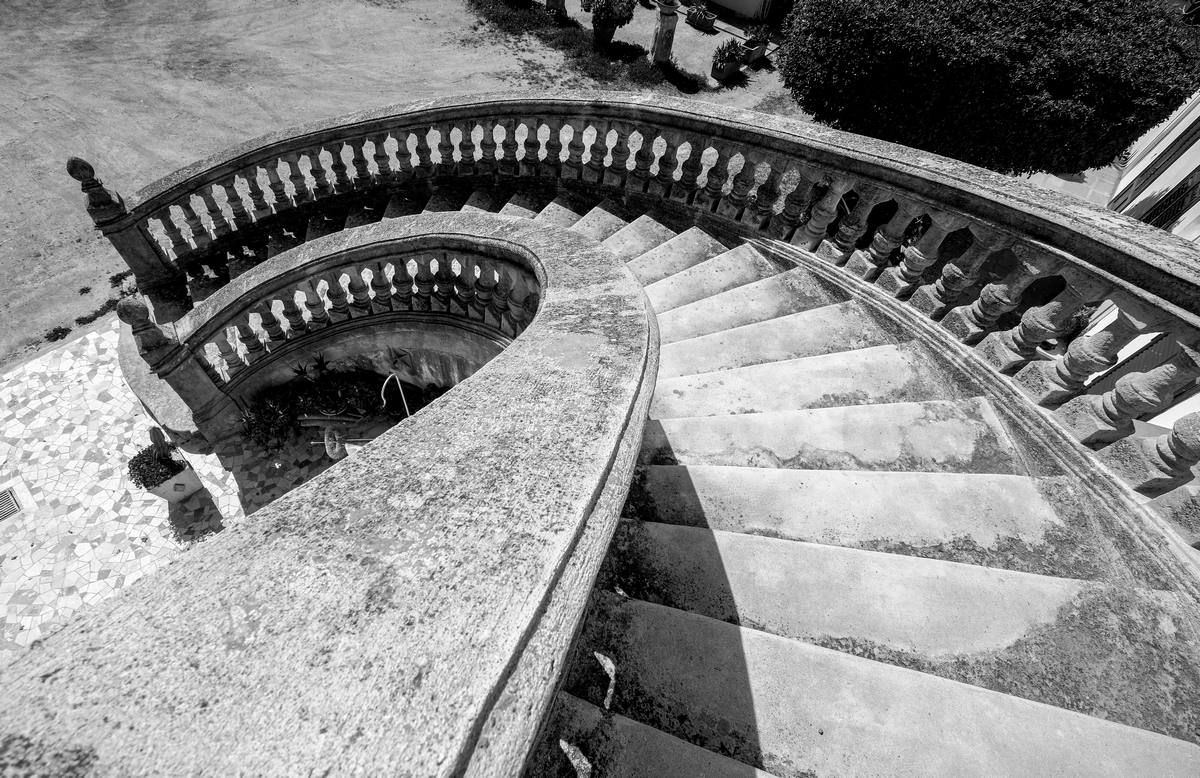
The villa’s monumental staircase was built in the second half of the 17th century. The rooms of the piano nobile feature 18th-century frescoes attributed to the Roman artist Gaspare Fumagalli depicting the four seasons, still lifes, and landscapes. The rooms on the ground floor were frescoed in Pompeian style at the end of the 18th century, indicating a change in the intended use of the ground floor. Toward the end of the 18th century, the villa passed to the banker Giuseppe Velia, who transferred it to the Isgrò family in the 19th century. After the Isgrò family, the villa was acquired by the Spina family. During the period of ownership by the Spina family, mezzanines were built in some halls of the piano nobile, which no longer exist. The Spina family also arranged the park, adding a belvedere and an artificial grotto. In the mid-19th century, the villa was modernized and the piano nobile was raised. At the end of the 19th century, exotic species were planted that radically changed the villa’s landscape.
Today Villa Spina is partly owned by the Palminteri family, who purchased the villa in the 1930s. The other half of the property was acquired by the Venezia family in 2010. Villa Spina is located opposite the Palazzina Cinese and the Parco della Real Favorita, borders Villa Lampedusa, and is situated near Villa Niscemi and Villa Castelnuovo. The villa is accessible from Via Duca degli Abruzzi, the road that connects Pallavicino to Palermo.
Use of the Villa
In recent years, Villa Spina has returned to the center of Palermo’s cultural life thanks to the efforts of the Palminteri family. In 2014, the villa’s halls were used for a theatrical performance open to the public entitled “Rooms.” The Palminteri family has recently promoted the idea of opening the villa to the public for community gardens, dog training, vegetable gardens, and educational farms for Palermo schoolchildren.
Future Projects
There are plans to equip part of the villa’s park with a prefabricated greenhouse, restrooms, a pergola for shading and supporting solar panels, a storage facility for agricultural equipment, enclosures for ponies, rabbits, and chickens, and a small vineyard. The two historic citrus gardens will also be enhanced with the addition of an irrigation system. The creation of a new entrance at the center of the exedra between two carved stone seats is planned. This will require the removal of a Leyland cypress and a prickly pear that grew spontaneously. A small iron gate will be installed at the entrance. Plans also include conducting a census of the main botanical species present in the park and commissioning an art historian to investigate the villa’s history in depth. The authorization documents for the interventions at Villa Spina were signed by the Superintendency of Cultural Heritage of Palermo on November 29, 2023.