Architectural Styles

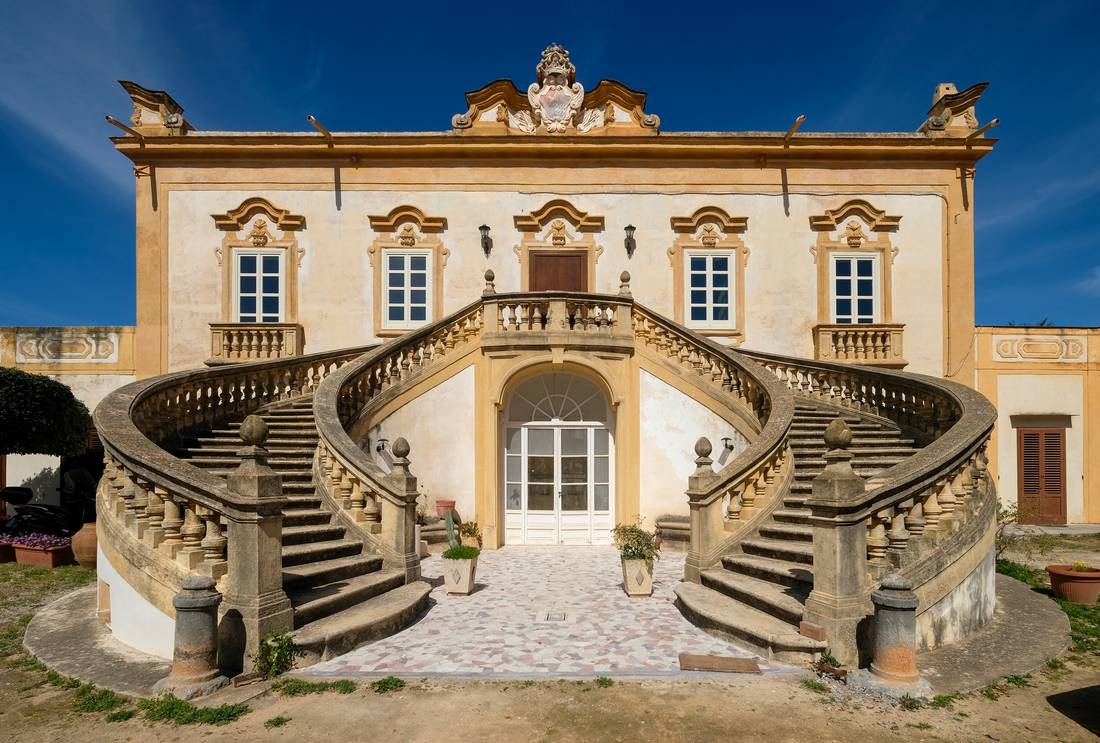
Villa Spina, originally called Villa San Vincenzo, was built in 1676 by the Vanni-La Torre di San Vincenzo family. Although constructed in the 17th century, it is considered an example of 18th-century art due to its interior frescoes. The villa features a regular layout with an elegant but not majestic facade. The facade is plastered in white and surrounded by molding. A large double-helix staircase leads to the main floor. The interior frescoes, created around 1740, have been attributed to the Roman painter Gaspare Fumagalli. The style of the frescoes is described as naturalistic and in harmony with the space surrounding the villa. In addition to allegories of the seasons, the frescoes include pastoral landscapes and still lifes inspired by Neapolitan art.
Interior Decorations
- Main Floor: The frescoes on the main floor, attributed to Gaspare Fumagalli, are considered an example of 18th-century art and depict allegories of the seasons, landscapes, and still lifes. Fumagalli’s style in these frescoes is described as “more airy and light” compared to his earlier sacred art works in Sicily. The main floor also features figurative majolica floors from Caltagirone, created in the second half of the 18th century.
- Ground Floor: The ground floor features paintings in the Pompeian style, which demonstrate a transition from Fumagalli’s Roman style to a Neapolitan style in Sicilian art. At the end of the 18th century, the ground floor rooms were decorated with Pompeian-inspired pictorial ornaments, including festoons, garlands, and mythological animals, arranged in classical quadratures. The overdoors feature “vedutistic” paintings with Arcadian landscapes and seascapes, typical of 18th-century taste.
Architectural Elements
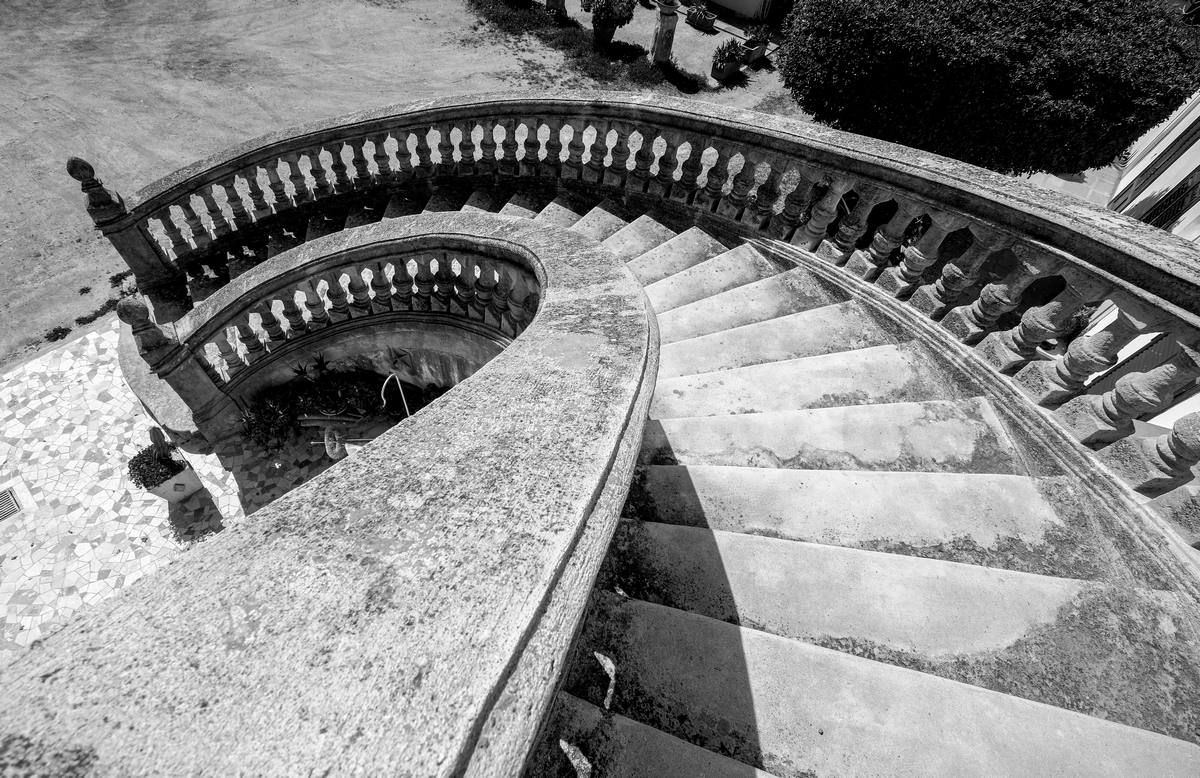
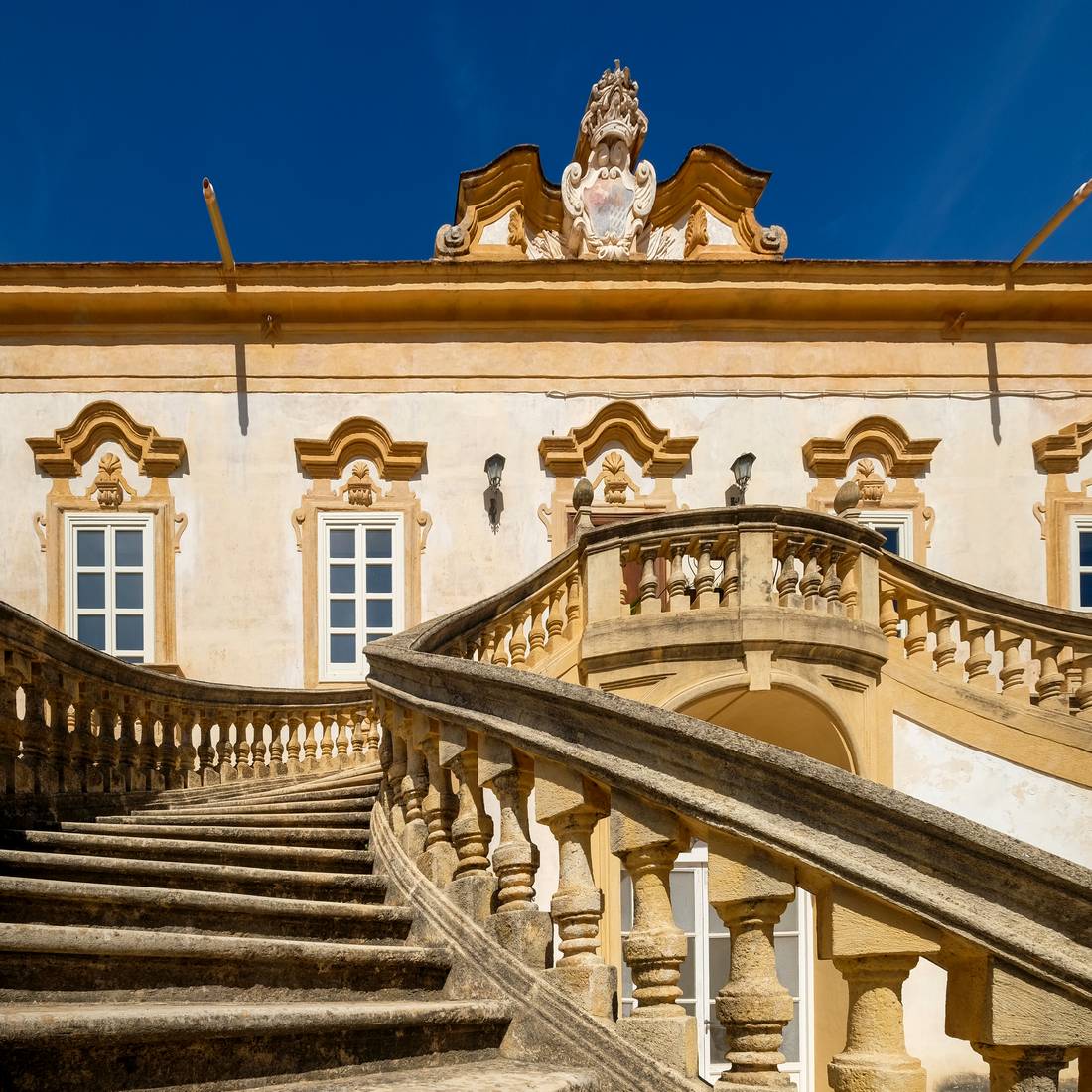
- Staircase: A notable architectural feature is the majestic double-helix staircase leading to the main floor. The staircase is a common element in Sicilian Baroque architecture and was often used to give a grand appearance even to more modest buildings. In the case of Villa Spina, the external and uncovered staircase is attached to the main facade and is located on the building’s axis of symmetry.
- Facade: The main facade of the villa features five large openings on the main floor: two windows, two balconies, and a portal. The openings are topped with mistilinear pediments decorated with stucco shells. At the corners of the building’s top are large acroteria, while in the center is a pediment with the family crest. These elements replace the attic wall typical of buildings of the time.
- Terraces: The lower side sections of the villa are covered by terraces with parapets decorated with relief geometric designs.
Sicilian Baroque Architecture
Sicilian Baroque architecture is an architectural style that developed in Sicily during the Baroque period, between the 17th and 18th centuries. Characterized by remarkable grandeur and a theatrical use of architectural elements, it represents a fusion of local influences and European Baroque trends. One of the distinctive features of Sicilian Baroque architecture is the use of elaborate facades, often enriched with sculptural decorations, columns, and pilasters.
In the case of Villa Spina, the monumental double-helix staircase is a perfect example of this influence, giving the structure a majestic and theatrical appearance. These staircases were typical of noble residences of the time and served not only as a means of access but also as an element of prestige and representation.
Pompeian Style
The Pompeian style, also known as Roman Pompeian style, is inspired by the decorations and paintings found in the Roman cities of Pompeii and Herculaneum, buried by the eruption of Vesuvius in 79 AD. This style is characterized by the use of vibrant colors, geometric motifs, mythological scenes, festoons, garlands, and representations of fantastic animals.
At Villa Spina, the paintings on the ground floor testify to the adoption of this style in 18th-century Sicily. The decorations include festoons, garlands, and mythological animals, arranged in classical quadratures, as well as overdoors painted with Arcadian and marine views. These decorative elements are typical of the Pompeian style and reflect a taste for antiquity that was very fashionable during the neoclassical period.
Neoclassical Influences
Neoclassical influences in architecture and art are manifested through a return to the simplicity, balance, and proportion typical of classical Greco-Roman art. Neoclassicism emerged in the 18th century as a reaction to the decorative excesses of the Baroque and Rococo, promoting a more sober and austere aesthetic.
Villa Spina features neoclassical elements particularly at the entrance on Via dei Quartieri, which was later modified with the addition of a wrought iron gate between sturdy pillars. This neoclassical intervention gives the entrance a more imposing and symmetrical appearance, in line with the principles of neoclassicism that favor geometry and order.
Conclusion
Villa Spina represents an interesting example of suburban villa architecture in Palermo, combining elements of various architectural and decorative styles, from Sicilian Baroque to Neoclassicism, with influences from styles such as the Pompeian. Its well-preserved garden, with its artificial grotto, adds further historical and cultural value to this significant site.
The Forked Staircase of Villa Spina
The forked staircase is an architectural element widely used in Sicilian Baroque architecture, employed to impart monumentality and lightness to buildings. The forked staircase of Villa Spina, leading to the main floor, is a double-helix staircase. The staircase is external and located on the main front of the villa. Its presence gives the otherwise heavy structure plasticity and elegance. The staircase is decorated with garden vases with original anthropomorphic shapes, a large moose slightly lowered from the ground floor, and shaped baluster columns.
The grand staircase is a recurring element in Sicilian Baroque architecture and was often used to impart monumentality and lightness to buildings. In the case of Villa Spina, the staircase is particularly imposing compared to the modest dimensions of the building. Its presence gives the villa a note of sumptuous choreography.
In addition to its aesthetic function, the forked staircase also had a practical function. Being external, it allowed access to the main floor without having to pass through the ground floor, which was often used for service. Moreover, the forked staircase, being open at the bottom, allowed passage through the building’s body.
The forked staircase of Villa Spina is an example of the mastery of Sicilian Baroque architects, capable of creating imposing yet elegant architectural elements. The staircase is a fundamental element of the villa, contributing to its unique and evocative appearance.