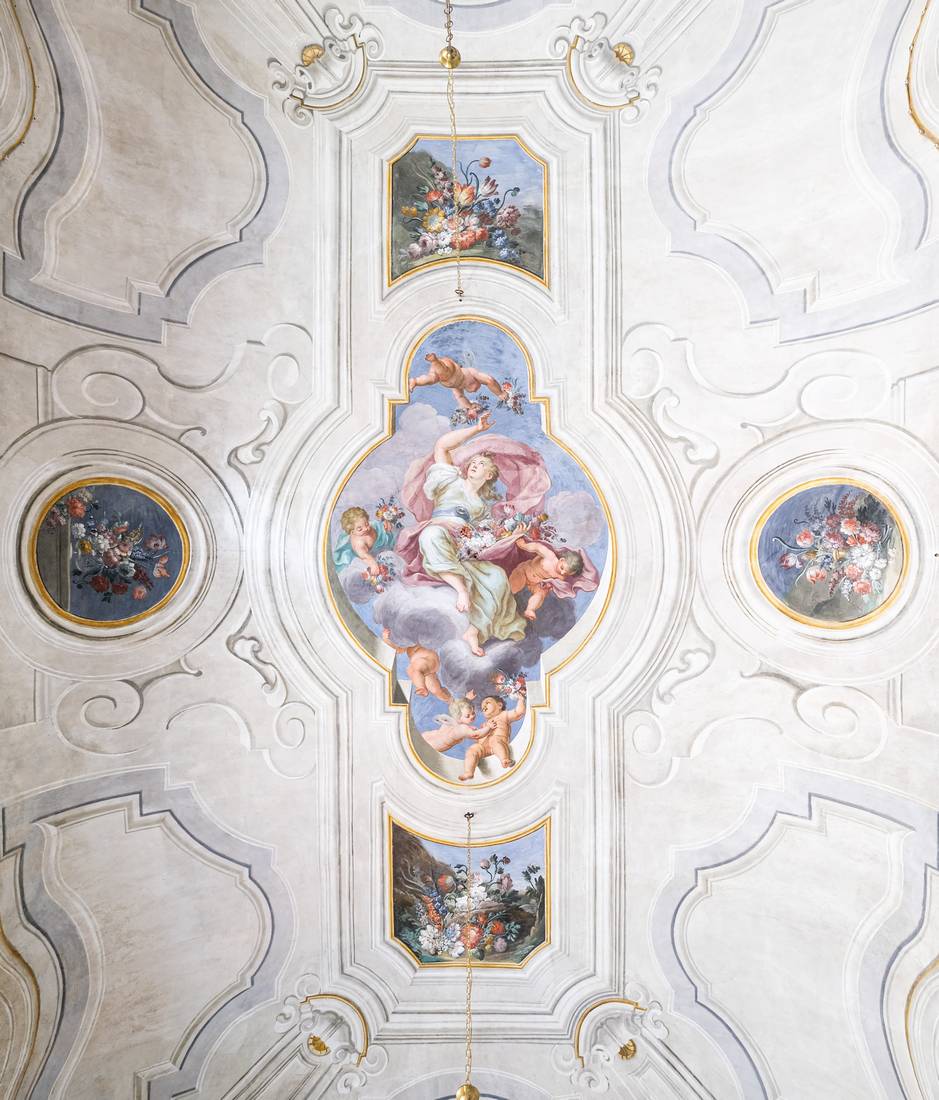
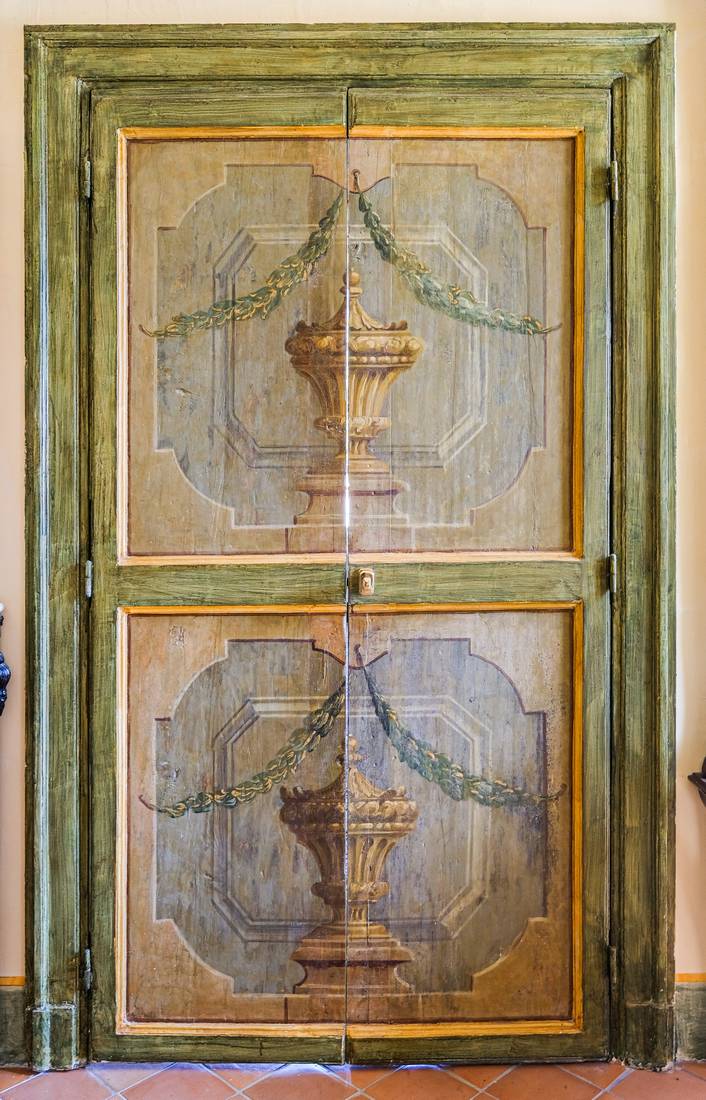
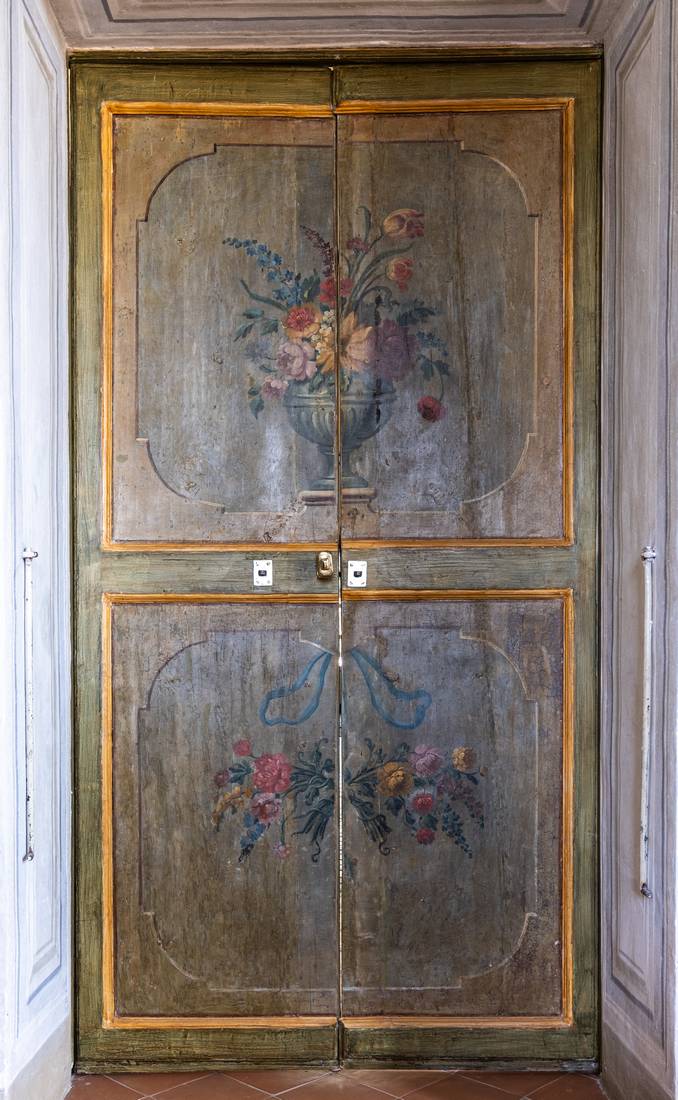
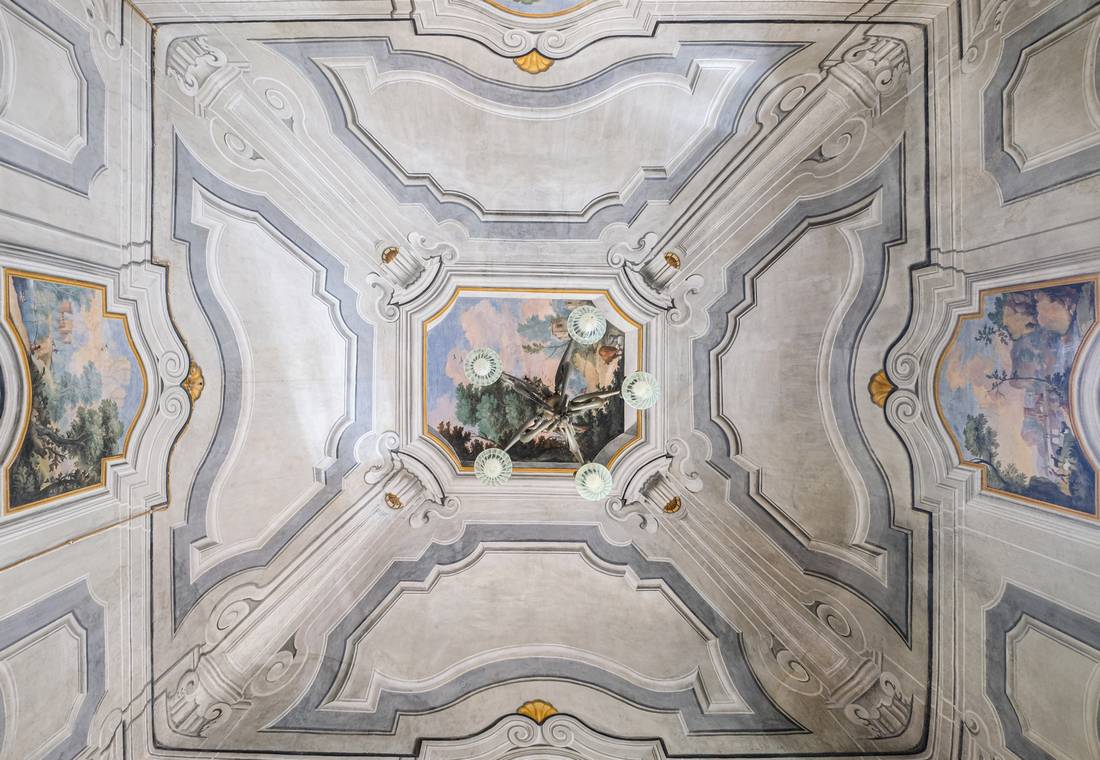
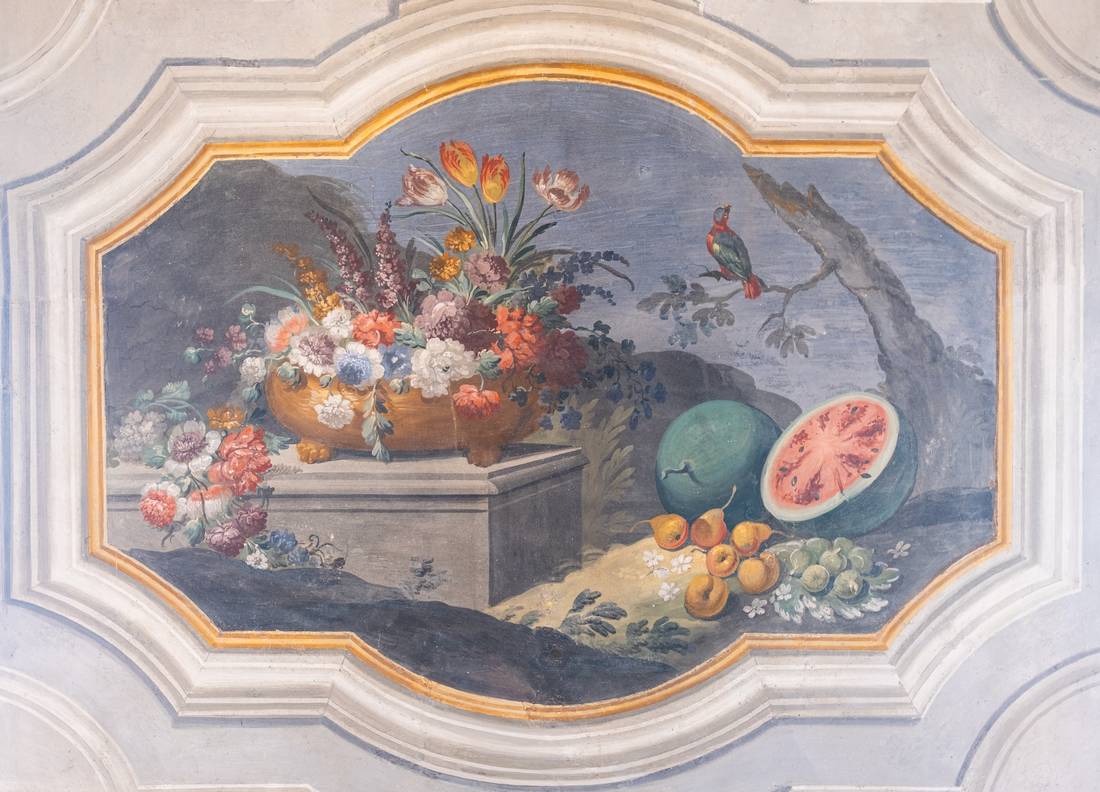
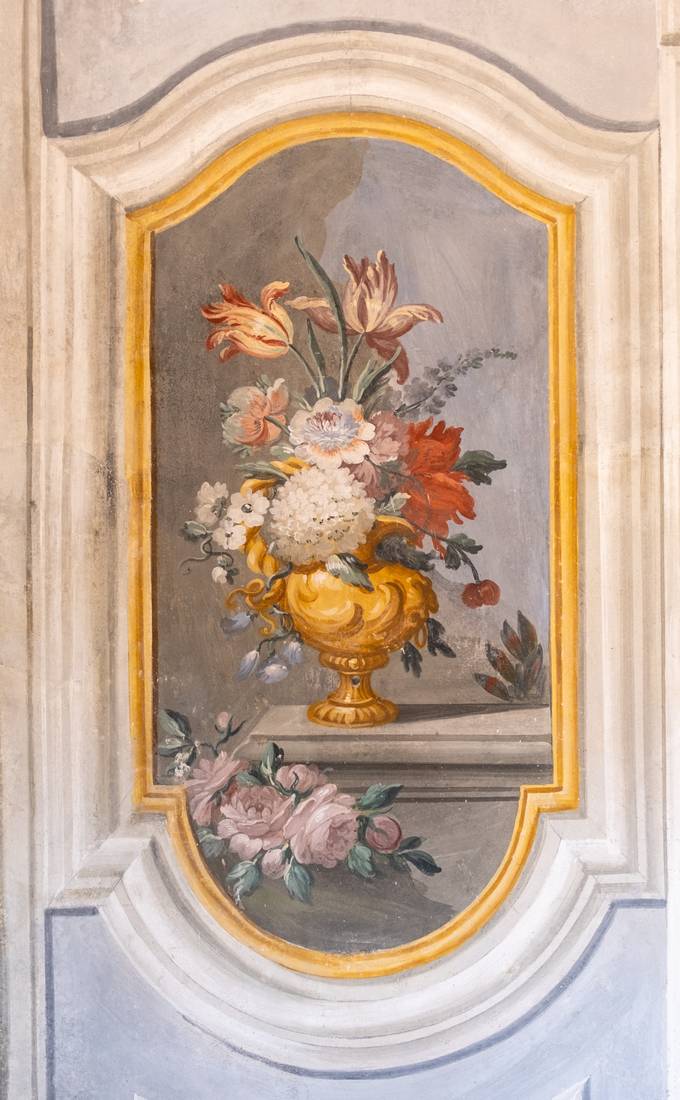
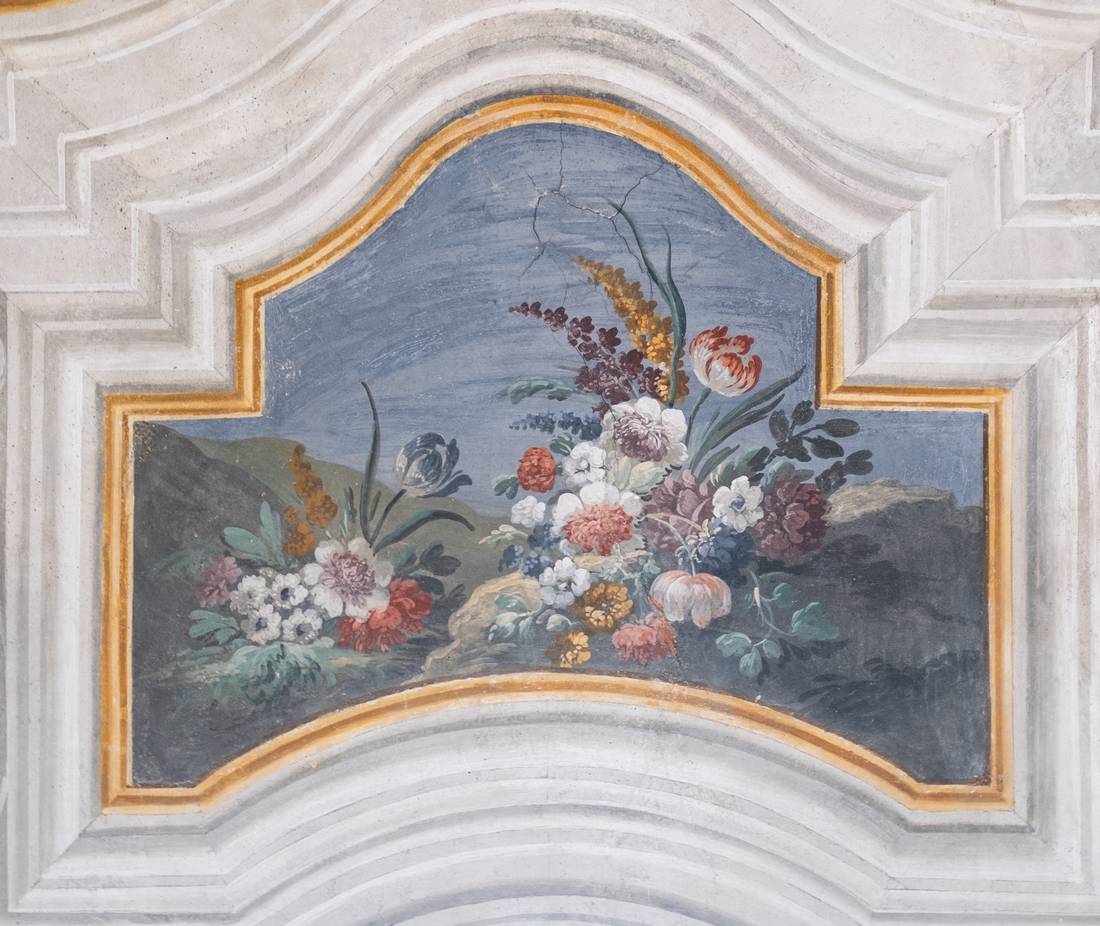
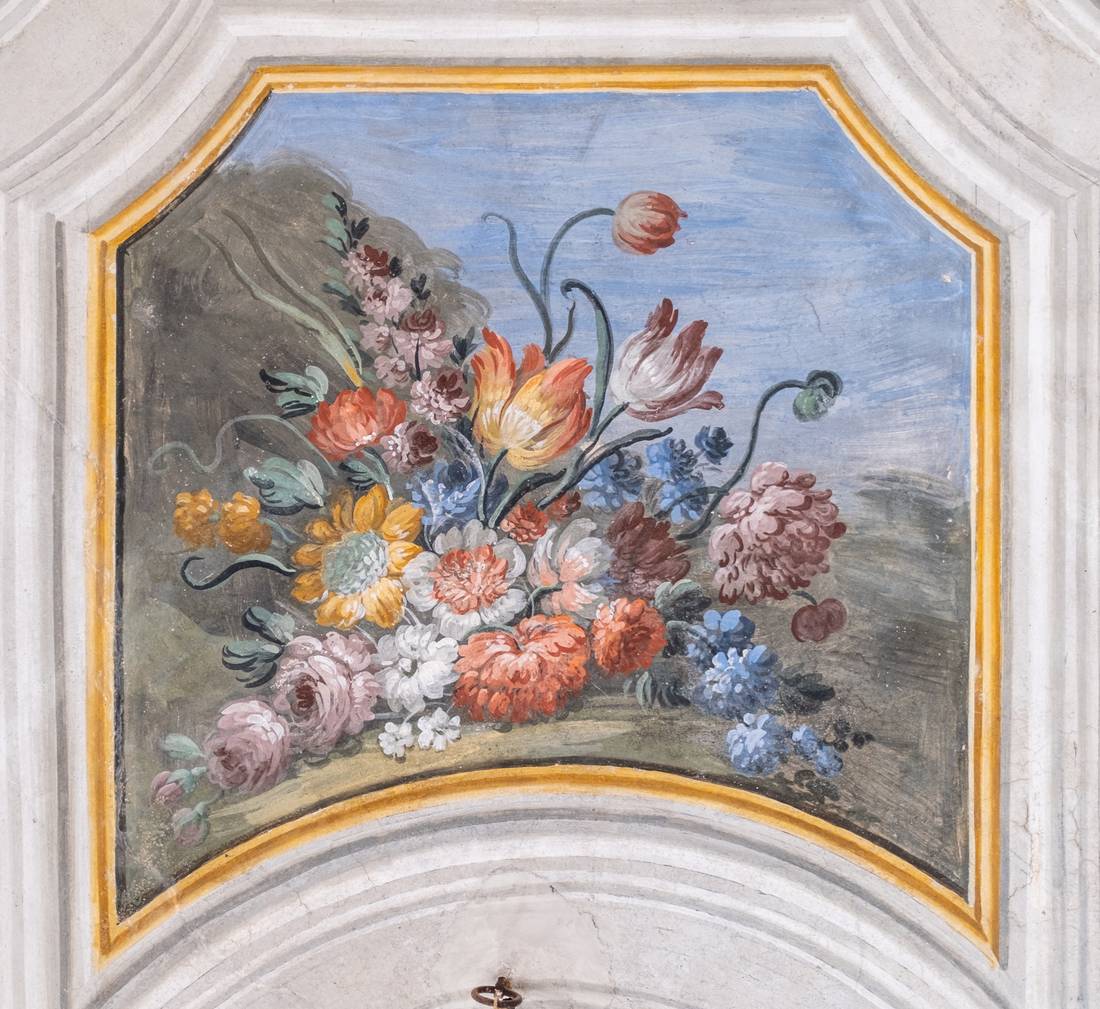
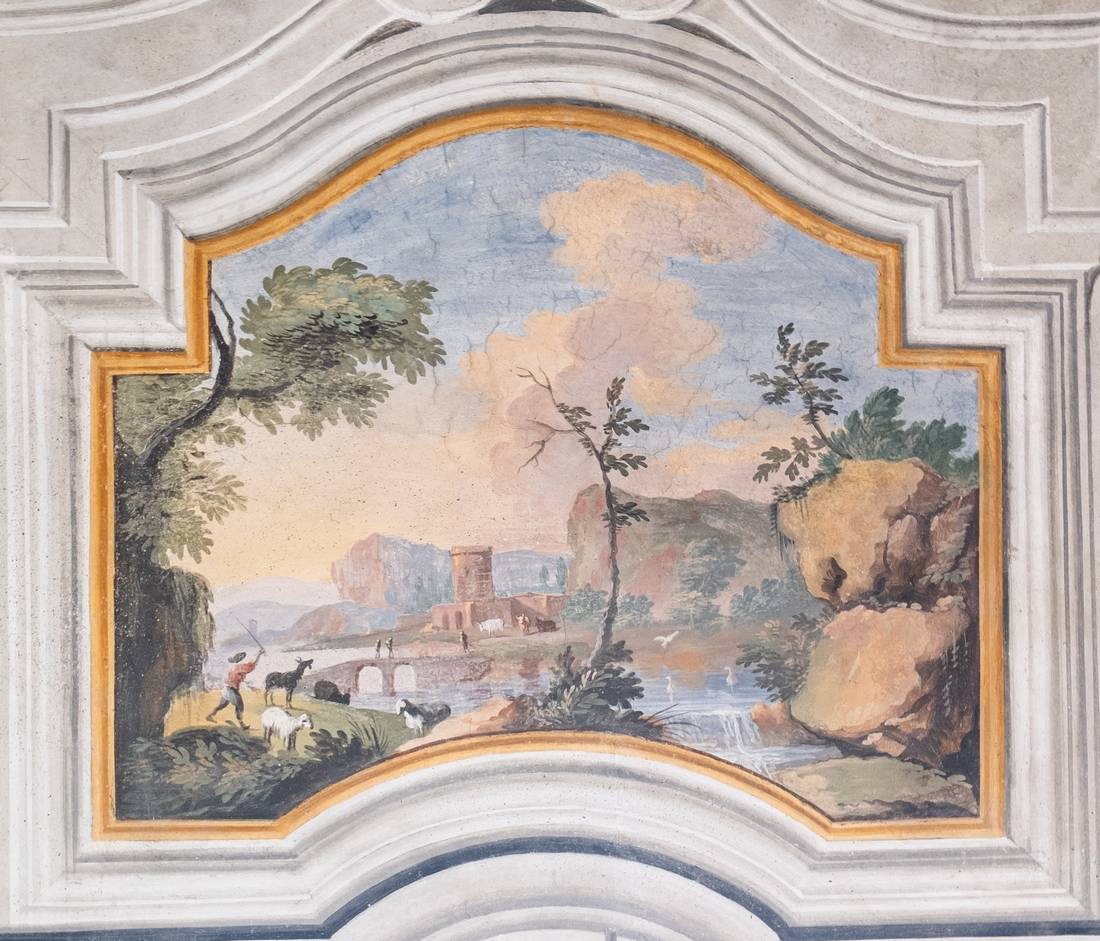
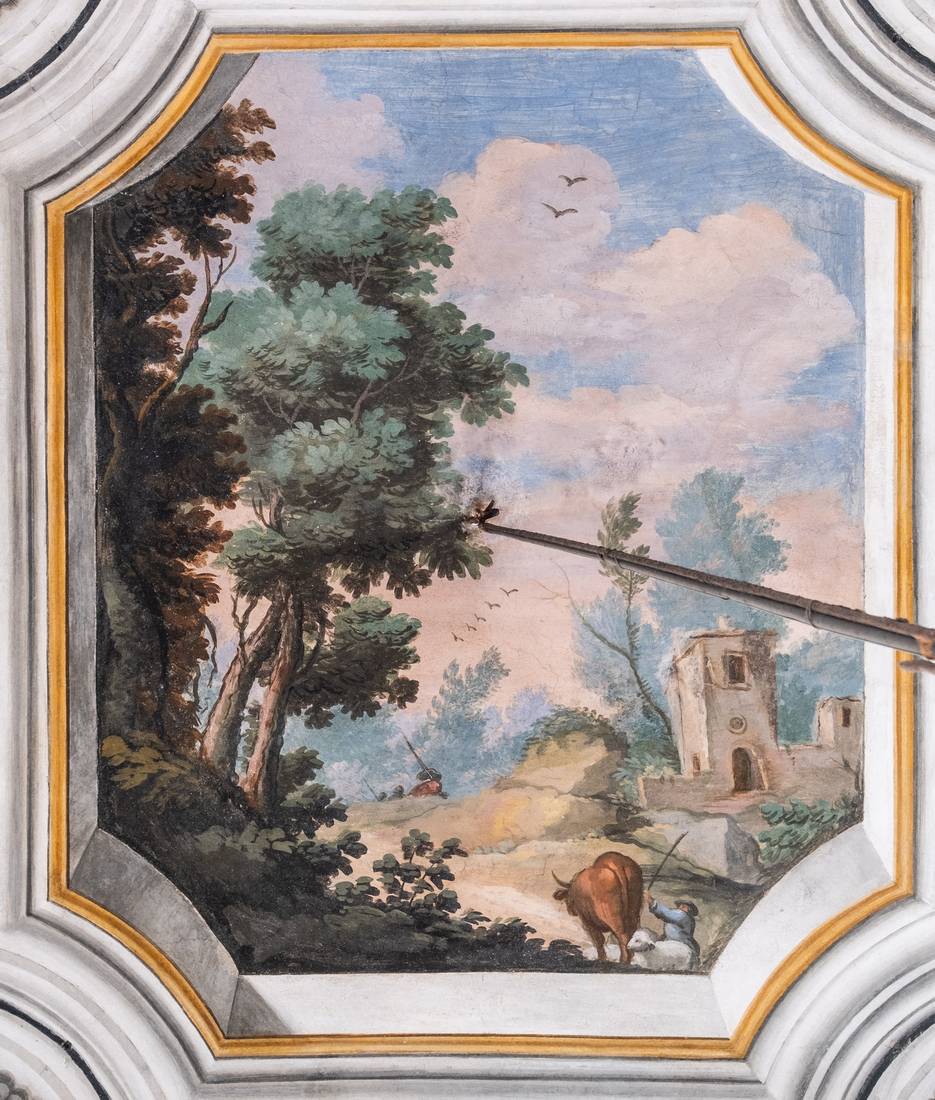
Villa Spina, an architectural jewel located in the picturesque Piana dei Colli in Palermo, houses within its walls an artistic treasure of remarkable value: the eighteenth-century frescoes attributed to the Roman painter Gaspare Fumagalli. Created around 1740, these frescoes offer a fascinating glimpse into the art and culture of the eighteenth century in Sicily.
Among the principal subjects of the frescoes, the Allegories of the Seasons stand out, a recurring theme in the art of the period. The choice to represent the seasons is not accidental: it reflects the harmony between the villa’s architecture, its garden, and the surrounding nature. As an article emphasizes, the frescoes seem almost to merge with “the vast surrounding countryside, accessible, at least then, through the opening of curtains and windows”.
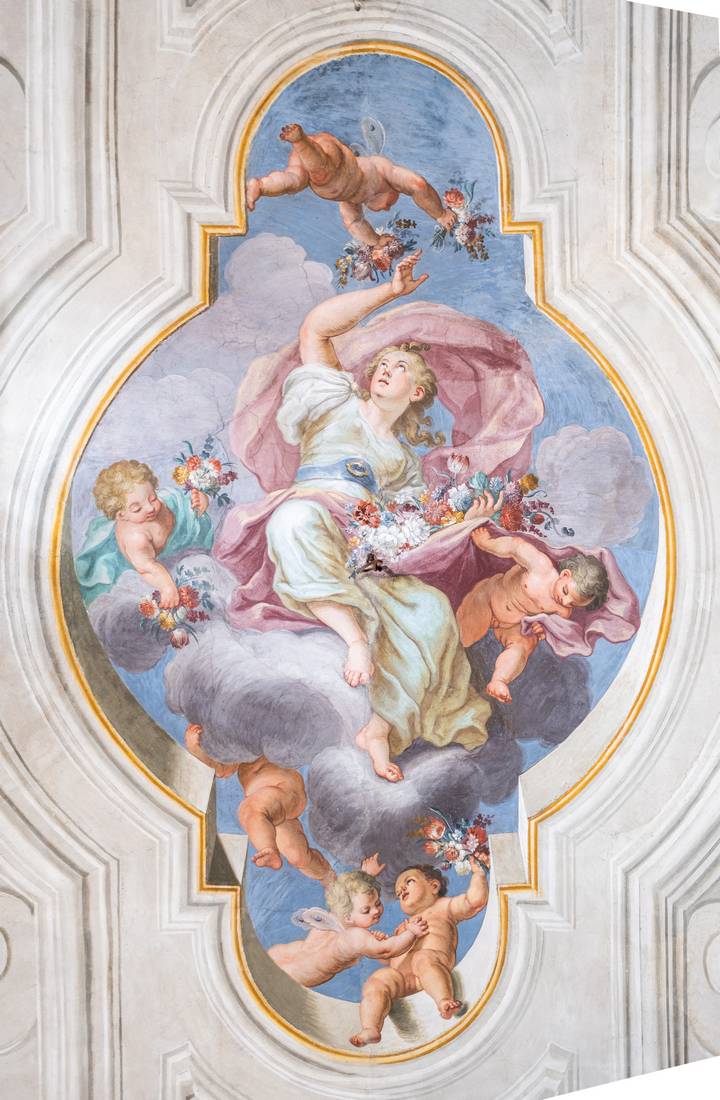
Spring, for example, is depicted in the vault of the dining room within a lobed frame. The traditional iconography, probably inspired by Cesare Ripa’s “Iconologia,” an important reference text for artists of the seventeenth and eighteenth centuries, is respected. A young woman, symbol of “mankind’s infancy,” is suspended among the clouds while generously scattering flowers, surrounded by playful putti. A similar work, also attributed to Fumagalli, can be found at Villa Pantelleria ai Colli, confirming the influence of this theme in the painter’s art.
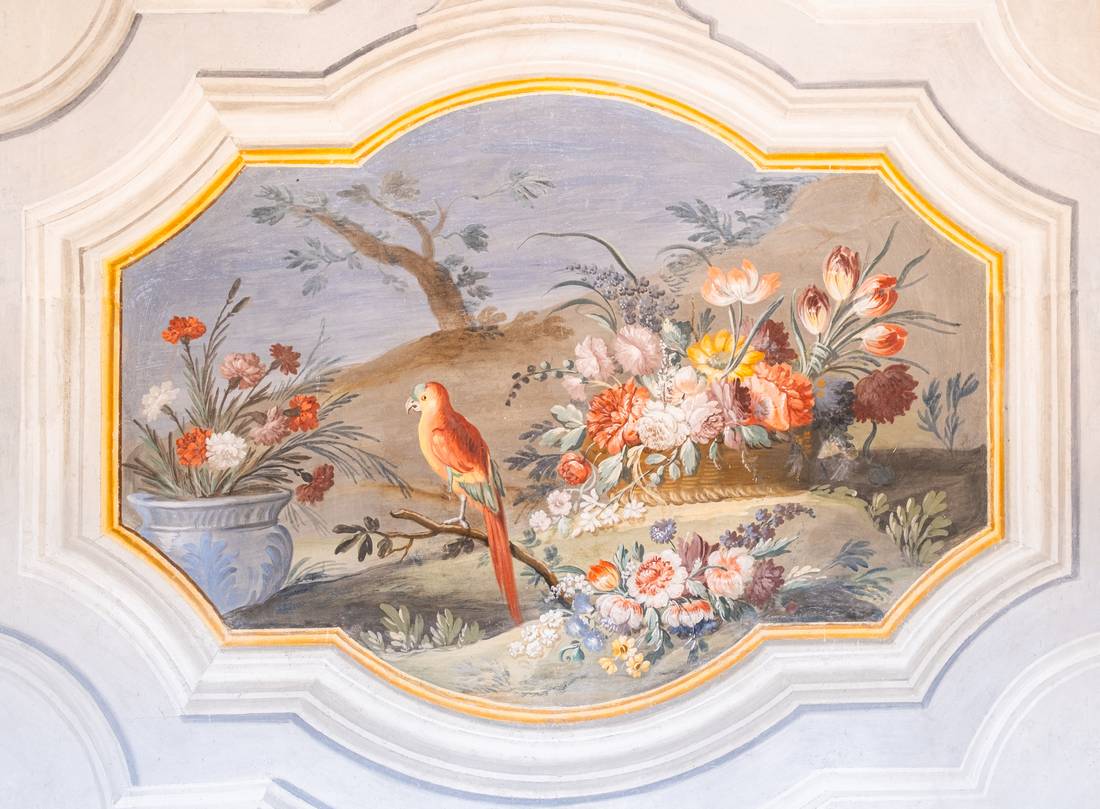
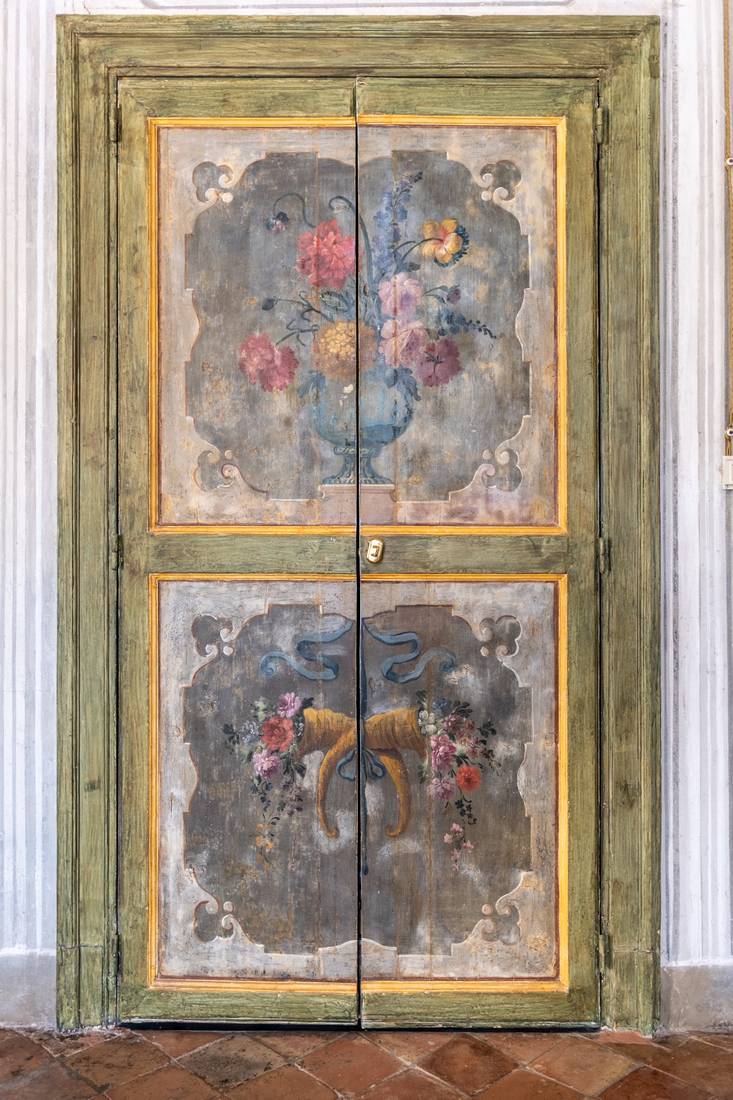
In addition to the Allegories of the Seasons, the frescoes of Villa Spina also include a variety of pastoral landscapes and still lifes of Neapolitan inspiration. This combination of themes and styles contributes to creating an elegant and refined atmosphere, typical of the summer residences of the era.
Unfortunately, the passage of time has left its mark on these masterpieces. The frescoes, now much faded, require restoration interventions to preserve their beauty and historical value. Despite this, they remain a significant testimony to the art of Gaspare Fumagalli and his contribution to eighteenth-century Sicilian art.
The sources do not provide detailed descriptions of the other frescoes of Villa Spina, such as the other three seasons, nor do they indicate whether there are other rooms in the villa decorated with Fumagalli’s frescoes.